Conus purpurascens Índice Descripción Distribución Referencias Bibliografía Enlaces externos Menú de navegaciónConus purpurascens G. B. Sowerby I, 1833G.W. Tryon (1884) Manual of Conchology, structural and systematic, with illustrations of the species, vol. VI; Philadelphia, Academy of Natural SciencesPetit, R. E. (2009). George Brettingham Sowerby, I, II & III: their conchological publications and molluscan taxa. Zootaxa. 2189: 1–218Puillandre N., Duda T.F., Meyer C., Olivera B.M. & Bouchet P. (2015). One, four or 100 genera? A new classification of the cone snails. Journal of Molluscan Studies. 81: 1-23The Conus Biodiversity websiteCone Shells - Knights of the SeaGastropods.com: Chelyconus purpurascensConus purpurascens42907745604051932347536919269641690428255Conus purpurascens
Conus
caracolamoluscogasterópodofamiliacónidosconosdepredadoresvenenososocéano Pacíficoislas Galápagosgolfo de California
Cono morado | ||
|---|---|---|
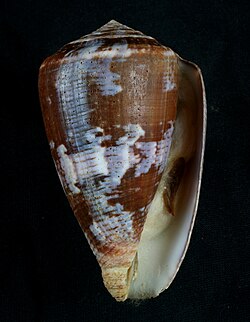 Caparazón de Conus purpurascens G. B. Sowerby I, 1833, encontrado en isla Venudo, en Panamá | ||
| Taxonomía | ||
Reino: | Animalia | |
Filo: | Mollusca | |
Clase: | Gastropoda | |
Orden: | Neogastropoda | |
Familia: | Conidae | |
Género: | Conus | |
Especie: | Conus purpurascens G. B. Sowerby I, 1833 | |
| Sinonimia | ||
| ||

Conus purpurascens, cuyo nombre común es cono morado, es una especie de caracola marina, un molusco gasterópodo marino de la familia de los cónidos, los caracoles conos.[1] Al igual que todas las especies del género Conus, estos caracoles son depredadores y venenosos. Pueden picar a los seres humanos, por lo cual los vivos deben manipularse con extremo cuidado, porque de su veneno se extrae la toxina Conantokin-P.
Índice
1 Descripción
2 Distribución
3 Referencias
4 Bibliografía
5 Enlaces externos
Descripción
El tamaño de sus caparazones varía entre 33 mm y 80 mm, es ancho en su extremo superior y cuenta con una aguja recia y estriada. El estriado de su caparazón a veces presenta un granulado. El caparazón presenta manchas blancas o violáceas, o también marrones y verdosas, con finas líneas. En el centro tiene a veces una banda blanca de forma irregular.[2]

Conus purpurascens Broderip, W.J., 1833

Conus purpurascens Broderip, W.J., 1833
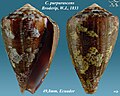
Conus purpurascens Broderip, W.J., 1833

Conus purpurascens Broderip, W.J., 1833


Distribución
La especie se puede encontrar en el océano Pacífico Central, frente a las islas Galápagos y en el golfo de California, México.
Referencias
↑ ab Conus purpurascens G. B. Sowerby I, 1833, en World Register of Marine species.
↑ G.W. Tryon (1884) Manual of Conchology, structural and systematic, with illustrations of the species, vol. VI; Philadelphia, Academy of Natural Sciences
Bibliografía
- Petit, R. E. (2009). George Brettingham Sowerby, I, II & III: their conchological publications and molluscan taxa. Zootaxa. 2189: 1–218
- Puillandre N., Duda T.F., Meyer C., Olivera B.M. & Bouchet P. (2015). One, four or 100 genera? A new classification of the cone snails. Journal of Molluscan Studies. 81: 1-23
Enlaces externos
 Wikimedia Commons alberga una categoría multimedia sobre Conus purpurascens.
- The Conus Biodiversity website
- Cone Shells - Knights of the Sea
- Gastropods.com: Chelyconus purpurascens
 Wikimedia Commons alberga una categoría multimedia sobre Conus purpurascens.
.mw-parser-output .mw-authority-control .navbox hr:last-childdisplay:none.mw-parser-output .mw-authority-control .navbox+.mw-mf-linked-projectsdisplay:none.mw-parser-output .mw-authority-control .mw-mf-linked-projectsdisplay:flex;padding:0.5em;border:1px solid #c8ccd1;background-color:#eaecf0;color:#222222.mw-parser-output .mw-authority-control .mw-mf-linked-projects ul limargin-bottom:0
| Control de autoridades |
|
|---|
 Datos:
 Datos: Q1305163
- Multimedia: Conus purpurascens


